
Manufacturer cooperation
Sales answers “ready”; production cannot supply allocation records. Request a named technical/origin owner and a representative evidence pack before committing to a recurring model.
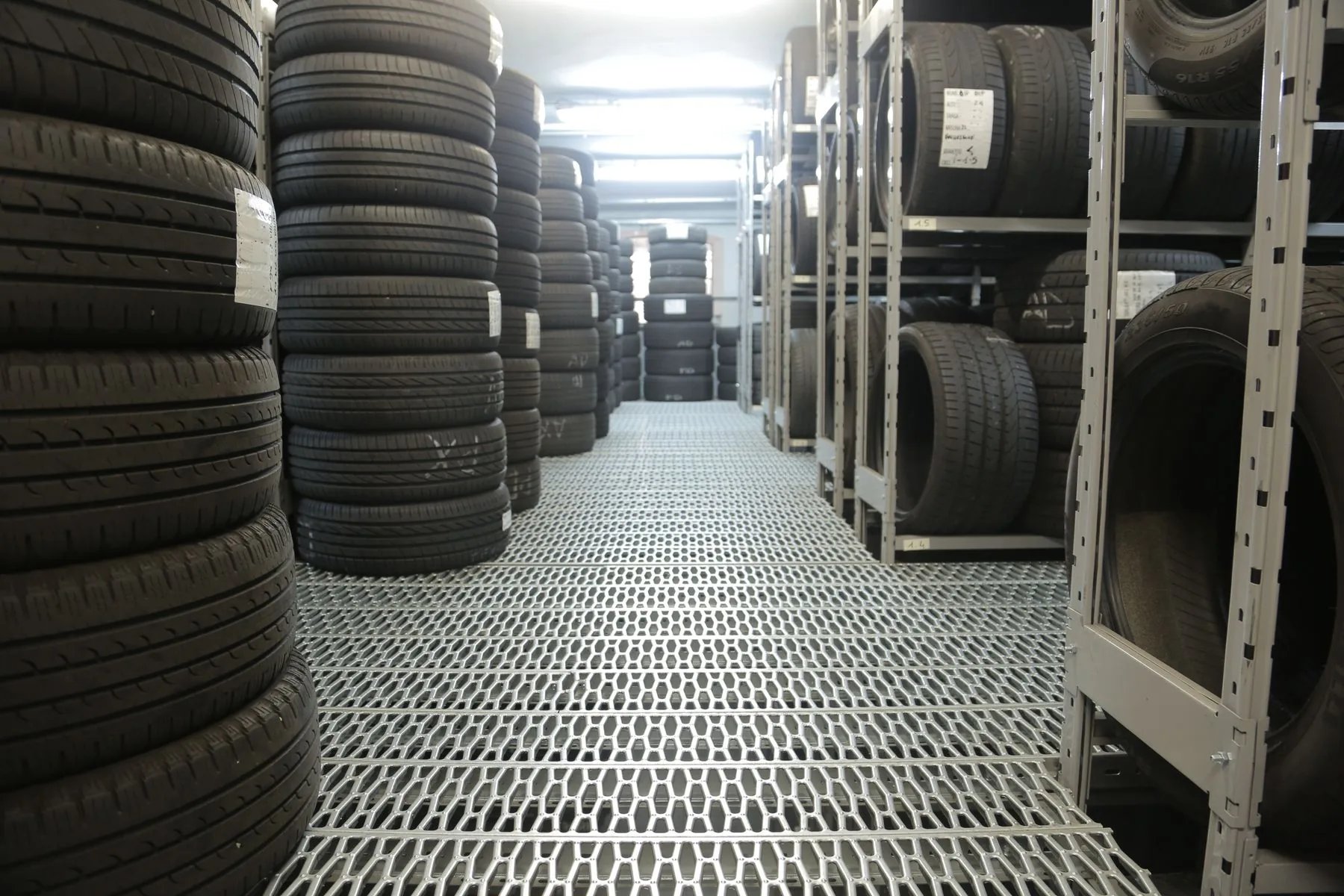
For EU importers of new tyres containing relevant natural rubber, the difficult work sits between the finished product and its production origins.
Assess your EUDR readinessOur most developed specialist workflow: natural rubber and tyres. Explore each link to see what supports the relationship and where the record stops.
Identify the importing entity, invoice lines and selected product families. Then connect the goods to the manufacturing batch. An export invoice does not locate the production plots.
Illustrative rubber and tyre operating route. Each link requires evidence; this graphic is not a live customer record.
Rubber & Tyres is MarketPass’s most developed specialist EUDR operating workflow. It sits within our broader managed EUDR operations service for EU importers. Other relevant commodity flows are assessed before engagement.
The current Annex I includes ex 4011, new pneumatic tyres of rubber. “Ex” limits coverage to the described subset. Assess the actual goods, material composition, current exclusions and classification; do not infer that all tyres or all rubber articles are covered.
The rubber commodity is now limited to Hevea brasiliensis. A purely synthetic product is not brought into scope by that commodity. For natural/synthetic blends, confirm which relevant natural rubber is present instead of treating synthetic content as a blanket exemption. Read the September 2026 Annex I amendment.
| Product entry | Current scope point | Importer action |
|---|---|---|
| ex 4011 | New pneumatic tyres; already listed before the 2026 amendment | Check described subset, relevant commodity and exclusions for actual goods. |
| ex 4012 90 30 | Tyre treads; replaces the former broad 4012 entry | Distinguish treads from retreaded/used tyres. Do not reuse an old whole-heading matrix. |
| Former ex 4010 / ex 4016 | Entries deleted by the 2026 amendment | Revisit old scope assumptions for belts and other vulcanised rubber articles. |
This table is an operational check, not a customs ruling. Our detailed scope guide separates the legal change, composition evidence and deadline decision.
First identify the importing legal entity, product line, quantity and representative invoice/packing-list references. Those establish the commercial flow. They do not explain the rubber’s production origin. Manufacturing and exporting countries can differ from the country where the natural rubber was produced.
Ask how the shipment lines resolve to production batches or a documented production period. A tyre model repeated across several runs is not a unique material-origin identifier. If batch identifiers are absent from the commercial record, establish the manufacturer’s cross-reference rather than inventing one.
Obtain the explanation of intake, consumption and allocation controls for relevant rubber inputs. A bill of materials can identify a natural-rubber blend while leaving its supplier lots unknown. Production logs, input allocations and carry-over records answer a different question: which inputs may have contributed to the selected output?
Connect each contributing lot or defensible sourcing set to processor and origin records. Collection and processing may combine material. The origin universe needs to cover the relevant inputs and period, with uncertainty disclosed. One processor address or one convenient farm cannot stand in for an unresolved upstream set.
Geometry is only one gate. The operator workflow also needs the required information and evidence supporting deforestation-free and lawful production, then the applicable risk review and mitigation. Articles 9–11 govern those elements; a well-formed GeoJSON file does not resolve the rest.
Sales answers “ready”; production cannot supply allocation records. Request a named technical/origin owner and a representative evidence pack before committing to a recurring model.
The factory sources rubber from several processors. Ask which candidate lots contributed, how the sourcing universe is bounded and how unknown material or carry-over is handled. A generic mass-balance claim is not shipment lineage.
The supplier file names a tyre catalogue, while the imported goods belong to a particular run. Reconcile commercial lines, output batches and input references instead of relying on unchanged SKU names.
Coordinates arrive with no period, plot identifiers or relationship to an input set. Treat technical validity and product linkage as separate review gates.
The next container has the same SKU but a different production batch. Check change triggers and the coverage boundary before reusing earlier evidence or conclusions.
A revised plot file silently replaces the old one. Preserve both, record the reason for change and identify affected pending or earlier reviews.
Shipment SH-EX41 links to batch B-A17. The manufacturer provides plot set PS-07. The missing record is B-A17’s allocation to natural-rubber lots NR-11 and NR-12, followed by each lot’s sourcing-set relationship. The action is a reconciliation request to the manufacturer’s production owner. The plot file stays “received; linkage unresolved” until that relationship is reviewed.
Inspect the complete example reportMost substantive EUDR obligations apply from 30 December 2026. The regulation already entered into force in 2023. Under amended Article 38(3), the 30 June 2027 route depends on the operator qualifying as a micro/small undertaking or natural person established as such by 31 December 2024, with the stated product conditions and EUTR exception. Medium-sized operators do not qualify just because “SME” is used informally. A small supplier does not defer its importer’s obligations.
The 30 December 2027 date for newly added Annex I products must not be applied to the pre-existing ex 4011 entry. The Commission timetable distinguishes these categories.
A direct importer, a downstream operator and a trader do not automatically have identical duties. Operators generally carry out due diligence and submit a DDS, subject to the specific primary-operator provisions. Amended Article 5 assigns different information/record duties to downstream operators and traders. Assess your role before designing a DDS hand-off. MarketPass by Encode supports the operation; the operator retains responsibility.
The €1,000 diagnostic reviews one legal entity, up to five SKU families, one representative import/purchasing flow and up to two chains. It produces an evidence inventory, traceability/geolocation assessment, blockers, owner/action plan, written report and management readout. It can recommend resolving dependencies before a recurring service is proposed.
See the fixed diagnostic scope or use the manufacturer request guide.
A focused diagnostic before you commit to a recurring operating model.